Cleobetra tax questions in Australia
 Available in AU
For an ordinary recreational gambler in Australia, gambling winnings are generally not treated as ordinary assessable income. A person carrying on a business of betting or gambling can be treated differently. Separately, if gambling winnings are received or held as cryptocurrency, a later disposal of that crypto can have capital-gains-tax consequences.
Table of Contents
- Recreational gambling and assessable income
- When gambling becomes a business question
- Crypto can create a second tax event
- Recreational gambling and other circumstances
- When gambling is a business
- A crypto withdrawal and a later disposal
- Useful records for crypto-linked gambling transactions
- Tax treatment is independent of casino authorisation
- Why the dates and AUD values matter
- Selling and swapping cryptocurrency
- When professional advice is particularly useful
- Records after funds leave the casino
- A cash gambling receipt and a crypto asset are different
- A wallet transfer is not the same as a sale
- Why an exchange can create a gain without a cash withdrawal
- When a Cleobetra win and a crypto disposal become two different Australian tax questions
Recreational gambling and assessable income
ATO guidance states that ordinary recreational gambling winnings are generally not assessable income. That is a general tax principle, not a Cleobetra-specific exemption and not personal tax advice.
The broad casino and Australian context is in Cleobetra Australia review.
When gambling becomes a business question
Professional or business gambling is a separate case. Whether activity amounts to carrying on a business depends on the facts and circumstances, so a high volume of play should not be reduced to a one-line rule.
Crypto can create a second tax event
The ATO states that disposing of crypto can trigger capital-gains-tax considerations. Disposal includes selling crypto, converting it to Australian dollars, or exchanging it for another crypto asset. This means the tax treatment of receiving a gambling win and the later tax treatment of disposing of crypto can be two different questions.
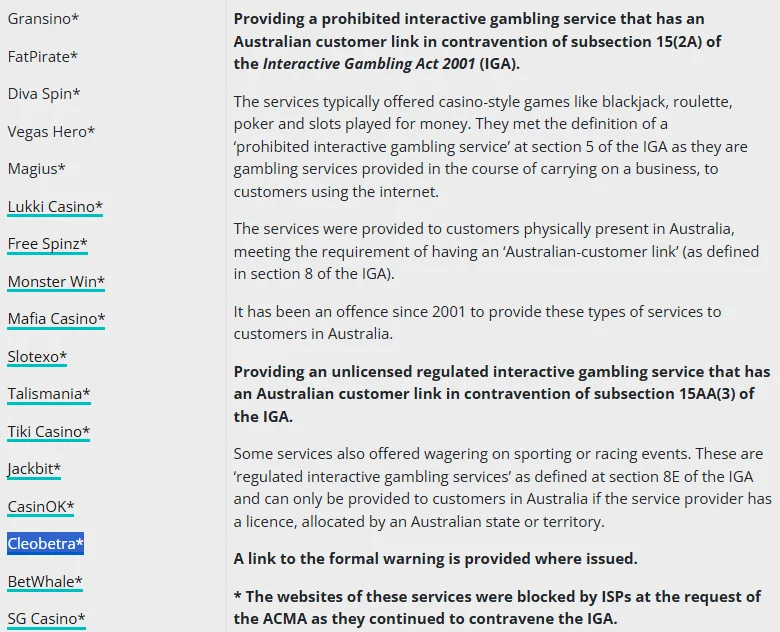
For legal-status context see Cleobetra in Australia and the ACMA block. Return to the main review for the broader product overview.
Source context: Australian Taxation Office guidance on gambling income and crypto disposals. Tax outcomes depend on individual circumstances; seek qualified advice for personal decisions.
Recreational gambling and other circumstances
Australian tax treatment depends on the character of the activity. Ordinary recreational gambling winnings are generally not assessable income, but the position can differ where a person carries on a business of betting or gambling. Cleobetra does not have a special tax exemption by virtue of being a particular brand.
The treatment of a later crypto transaction is also a separate question. An amount received from gambling and the later disposal of an asset can occur on different dates and be governed by different tax rules.
When gambling is a business
Whether betting or gambling amounts to carrying on a business depends on all relevant facts rather than a single number of wagers or one unusually large receipt. Organisation, regularity and the nature of the activity can be relevant. Personal circumstances can therefore matter more than the name of a site.
The general position for a recreational gambler should not be presented as an absolute rule that applies to a person operating a gambling business. Anyone with organised or substantial activity should seek individual advice on the character of their income and related expenses.
A crypto withdrawal and a later disposal
A person receiving cryptocurrency can later sell it for Australian dollars, exchange it for another crypto asset or use it in a transaction. The ATO treats disposal as a potential capital-gains-tax event. The crypto’s value can move after receipt, which is why the disposal and gambling receipt should not be treated as one event.
Date, asset quantity, AUD value, fees and wallet or exchange records can help establish the relevant cost-base and disposal information. The actual treatment depends on the holder’s circumstances, including whether the asset is held or dealt with in another business context.
Useful records for crypto-linked gambling transactions
- The date and AUD value when the crypto was received.
- The asset and amount received.
- Wallet and transaction records needed to identify later disposals.
- The AUD value at the time of sale, exchange or conversion.
- Any relevant transaction costs.
These are record-keeping considerations rather than a personal tax calculation. A registered tax professional can assess unusual or high-value circumstances.
Tax treatment is independent of casino authorisation
The tax character of a gambling receipt does not depend on whether a specific casino is approved by ACMA. Tax law and gambling regulation answer different questions. Recreational gambling income and a later disposal of cryptocurrency may have different tax outcomes, regardless of the casino’s regulatory position.
Likewise, a general tax rule does not validate the underlying gambling service. A recreational win being generally non-assessable is not a statement that the operator was authorised to provide the service.
The Australian provider and licence position is covered in Cleobetra Australia legal status.
The date and scope of ACMA’s action appear in Cleobetra ACMA block.
Why the dates and AUD values matter
An amount recorded only in units of cryptocurrency does not show its Australian-dollar value on the relevant date. The ATO’s crypto guidance describes CGT consequences of disposing of crypto assets, including conversion to fiat money and exchanging one asset for another.
When the asset is later disposed of, the acquisition and disposal records allow the change in value to be considered. A casino withdrawal confirmation alone may not contain the exchange-rate history or transaction costs needed for that calculation.
Selling and swapping cryptocurrency
Selling crypto for Australian dollars is a disposal. Exchanging one cryptocurrency for another can also be a disposal even when no money enters a bank account. Those transactions are separate from the earlier event that produced the crypto balance.
For a person who received crypto from gambling, retaining records from the time of receipt through each later disposal is important. A later gain or loss can arise from movement in the asset’s value, not from a second gambling result.
When professional advice is particularly useful
Large, frequent or organised gambling activity, business-like betting activity, and significant crypto holdings can make the tax analysis more complex. The general ATO framework does not determine any individual’s business status or capital gain.
Those cases warrant individual advice based on the full facts, especially where multiple wallets, exchanges or currencies are involved.
Records after funds leave the casino
For a cryptocurrency payout, the casino transaction record can identify the asset, amount and withdrawal event. Later wallet and exchange activity may be needed to identify the disposal date, AUD value and any relevant costs. The history should be retained even if the casino account is no longer accessible.
For a fiat withdrawal that does not involve receiving and later disposing of crypto, this particular crypto-disposal issue may not arise. The recreational-versus-business gambling distinction remains a separate tax question in both cases.
A cash gambling receipt and a crypto asset are different
An ordinary recreational gambling receipt is generally outside assessable income under the ATO’s approach. That does not mean every asset later acquired or disposed of with the funds remains outside tax consideration. If cryptocurrency is received and kept, changes in its value can matter when the asset is later disposed of.
The relevant dates can be separated by days, months or longer. Receipt of the gambling payout is one event; a later conversion, sale or exchange is another. The AUD value at each stage, along with the asset amount and transaction costs, helps identify which economic change relates to the later asset transaction rather than the original gambling result.
A wallet transfer is not the same as a sale
ATO guidance distinguishes disposal from a transfer between wallets where the same person retains ownership of the asset. Moving crypto from one wallet you control to another generally does not itself have the same treatment as selling it. The treatment of a network fee can require separate consideration if part of the asset is disposed of to pay that fee.
Where a network fee is paid in cryptocurrency, part of the asset may be disposed of to cover that fee even though the main balance remains under the same owner’s control. Transaction records can identify the fee separately from the transferred amount, which is relevant to the ATO distinction between a wallet movement and a disposal.
That distinction is relevant after a casino withdrawal. Receipt into a wallet, movement between personally controlled wallets, sale for Australian dollars and exchange for another crypto asset are different events. Keeping the transaction identifiers and dates allows each movement to be classified from the actual records rather than from the fact that funds originated with Cleobetra.
Why an exchange can create a gain without a cash withdrawal
A crypto-for-crypto exchange is a disposal even if the holder never converts the asset into Australian dollars. The ATO describes determining proceeds and cost base using Australian-dollar values. A change in price between acquiring and exchanging the first asset can therefore be relevant before a separate sale to a bank account.
This makes transaction histories important for someone who receives a gambling payout in crypto and later trades it. The records should identify the asset received, the amount and AUD value at receipt, and each subsequent transaction. They do not by themselves determine whether the original gambling activity was recreational or a business.
When a Cleobetra win and a crypto disposal become two different Australian tax questions
The key distinction is timing and character. The gambling result and a later crypto disposal are not automatically the same tax event. Keeping records of dates, AUD values and disposals is important where crypto is involved.
Official information: ATO guidance on crypto transactions and record keeping.
Created by the ”Cleobetra Casino” editorial team.